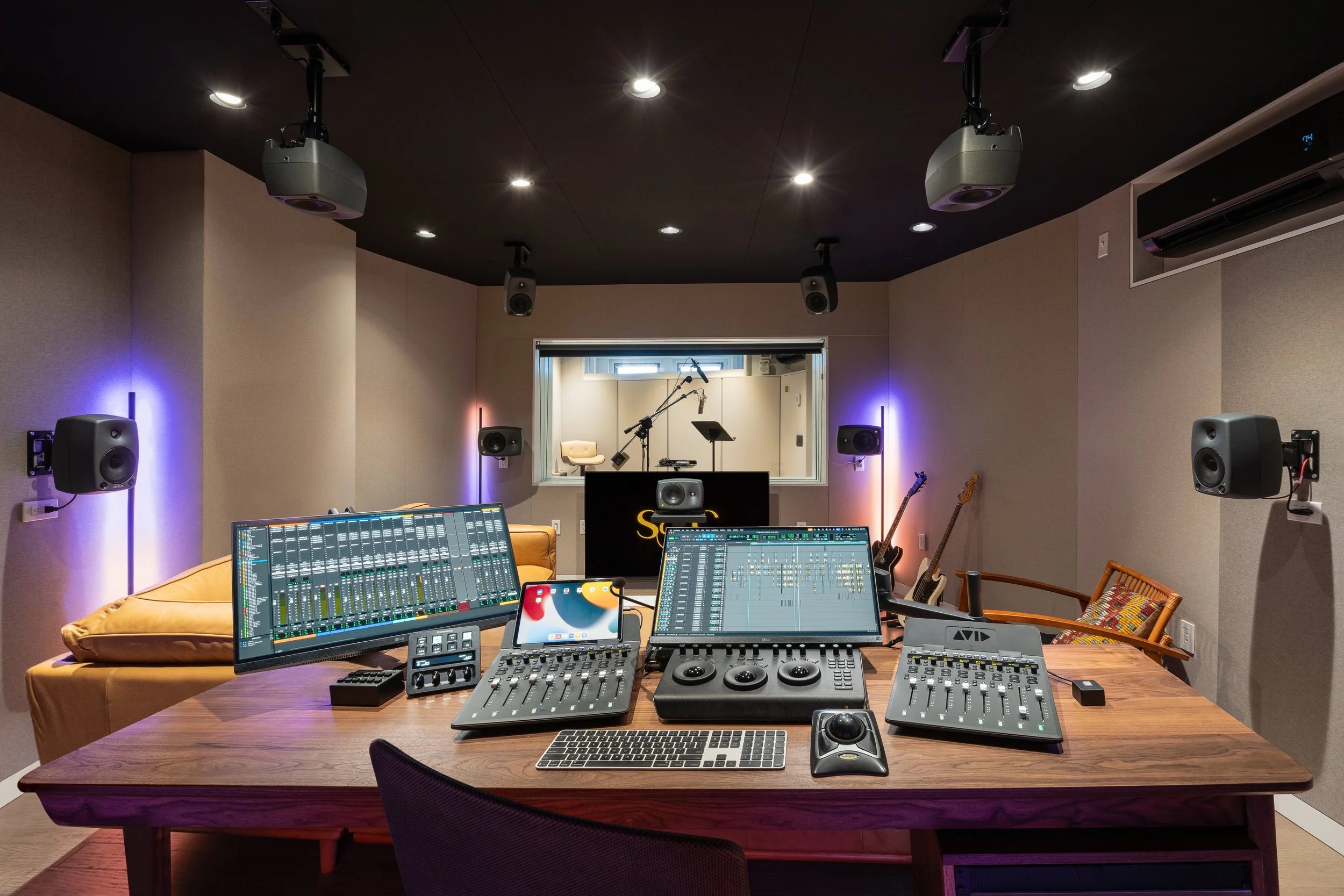
Premium audio post-production and podcast studio designs for dynamic media teams.
SoniPlan designs audio post and podcast studios that are quiet and controlled, so sessions run smoothly from day one. We move quickly from early concepts to a buildable plan, and stay heavily involved through construction so the finished space confidently meets the standards your work demands. Book a call and we’ll map clear next steps for your project.
Trusted by leading media,podcast,audio,post,Atmos,studio teams.
Years of Experience
Happy Clients
Stellar Projects
"Working with Tim on our Dolby Atmos studio was an absolute pleasure. We initially struggled with another firm on the project who was not meeting our needs. We decided to bring on Tim and his team to get things back on track and they guided the project from design all the way through Dolby's certification. His creative vision and expertise is exceptional. His execution far exceeded our expectations. The room looks and sounds amazing!"
Danielle DiStefano
Chief Technology Officer, iTV America
Our Results
Our results speak for themselves. Here's a select few highlights that we're proud of.
- Consistently achieved NC15–20 at the listening position, with HVAC running.
- Tuned rooms for exceptionally flat response at the listening position.
- Solved real-world isolation constraints including NYC street noise, subways, freight elevators, and mechanical/HVAC equipment.
- Trusted by leading podcast teams including Pushkin, audiochuck, and Slate.
- Supported major media brands including Marvel, HBO, CBS, and VICE.
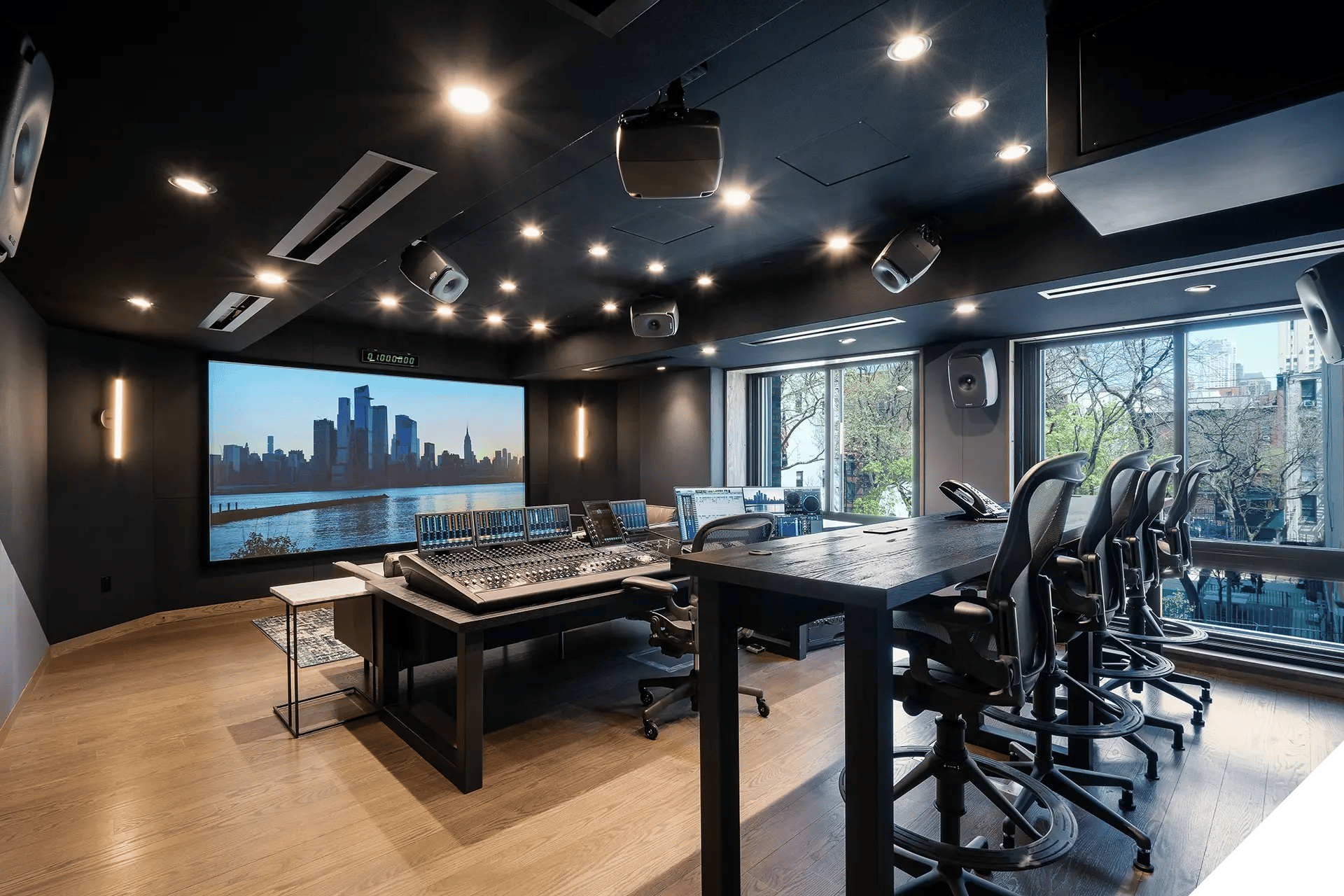
- Designed multiple Dolby Atmos Home Entertainment rooms, including the first room certified on the East Coast (Motion Picture Enterprises, early 2020).
- Designed Audiochuck's flagship studio where Crime Junkie, a Top-3 Apple Podcast, is produced.
Choose Your Path
Audio Post Teams
Rooms built for accurate monitoring, critical listening, and confident decisions.
- Tuned rooms with flat responses for accurate monitoring and critical listening.
- Dolby Atmos stages designed for immersive mixing to meet current deliverable standards.
- Low-noise environments engineered for long sessions even with HVAC running and real-world noise outside the room.
- VO booths and ADR stages designed for efficient sessions and clean capture.
- TPN-aware facility planning that takes access control, circulation, and secure zones into consideration to support content-security requirements.
Podcast Teams
Audio-first, video-forward rooms built for friction-free recording and repeatable sessions.
- Controlled room response so voices sound clear and natural — without feeling unnatural.
-
Consistent sound throughout the room so hosts and guests match across sessions/episodes.
-
Quiet rooms that support all-day recording without constant workarounds.
-
Audio-first, video-forward layouts (camera sightlines, lighting zones, backdrop positions).
-
Practical production infrastructure for friction-free sessions (furniture, backdrops, lighting integration, clean staging).
If one of these paths sounds like you, the best next step is a quick conversation to map what you’re building and what matters most.
When To Call
The earlier you bring us in, the more leverage we have in designing the best possible audio facility. We help you define priorities, set the right performance targets, and make key decisions in the right order, so the build stays on track and the finished rooms perform the way they should. We also support upgrades when existing rooms are creating friction or the facility can’t keep up.
A. You're Building New
Congratulations! You’re planning a new podcast or audio post facility and want to make the right decisions early — before they get expensive to change. We help you define what you’re building, set clear performance targets, and map the critical decisions in the right order. Then we turn intent into a buildable plan and stay involved through construction so noise control, room response, and quality of finish don’t drift along the way.
What this gives you:
- A clear plan for rooms, adjacencies, and priorities
- Targets for isolation, noise floor, and room response
- Build-ready documentation to guide the project through construction
- Support through construction to protect the outcome
B. Feeling Growing Pains
The team and output have grown, but the rooms haven’t. Schedules get tight, rooms become overbooked, and quality slips under pressure. We help you plan the right expansion — so capacity increases without creating new problems.
C. Rooms Not Performing
Your rooms “work,” but not at the level your team needs now — noise, acoustics, layout, and systems create daily compromises. Upgrades have piled up over time, and the space no longer supports consistent results. This is where a clear plan and a coordinated design approach can change everything.
What's At Stake
A podcast or audio post studio project can feel risky when the timeline is unclear and the outcome is hard to predict. Teams worry it will take too long, cost too much, and quietly pull key people into managing a complex build instead of leading sessions and delivery. A clear plan matters, but so does having an experienced team guiding the work from early decisions through execution so the space ends up where you intended. The goal is a finished facility that performs at a serious level and supports the standard your work demands.
The Risks
- Time & disruption — Renovations and builds can disrupt operations if they aren’t planned and coordinated carefully.
- Cost & surprises — Unclear scope and late decisions are what turn budgets into moving targets.
-
Outcome risk — If noise and acoustic goals aren’t protected through execution, the finished room can miss the mark.
Outcomes Matter
When rooms are designed properly, teams move with more confidence and less hesitation — because the space supports the work instead of getting in the way. The difference shows up in the day-to-day: smoother sessions, clearer decisions, and results that hold steady across different operators, formats, and workloads. We design for both performance and practicality so the finished room doesn’t just look premium on day one — it stays reliable as the work scales. Here’s what that typically looks like in practice.
- Quiet rooms with low noise floors that support focus and clean capture.
- Acoustically accurate environments designed for dependable decisions in post.
- Consistent capture conditions that hold up across sessions, talent, and operators.
- Spaces built around real workflows so sessions run smoothly day to day.
- Comfort and usability for long sessions so teams can work at a high level without fatigue.
- Premium design that feels intentional and matches the standard of your work.
- Rooms that scale with output without becoming fragile or difficult to run.
What We Design
We design podcast studios and audio post facilities — from focused single rooms to multi-room builds. Our work is shaped by how teams actually operate: capture, edit, mix, approve, and deliver at speed. That means performance and practicality get equal attention, alongside a strong point of view on aesthetics. The goal is a space that feels premium and works reliably every day.
Audio Post Facilities
-
Dolby Atmos Rooms
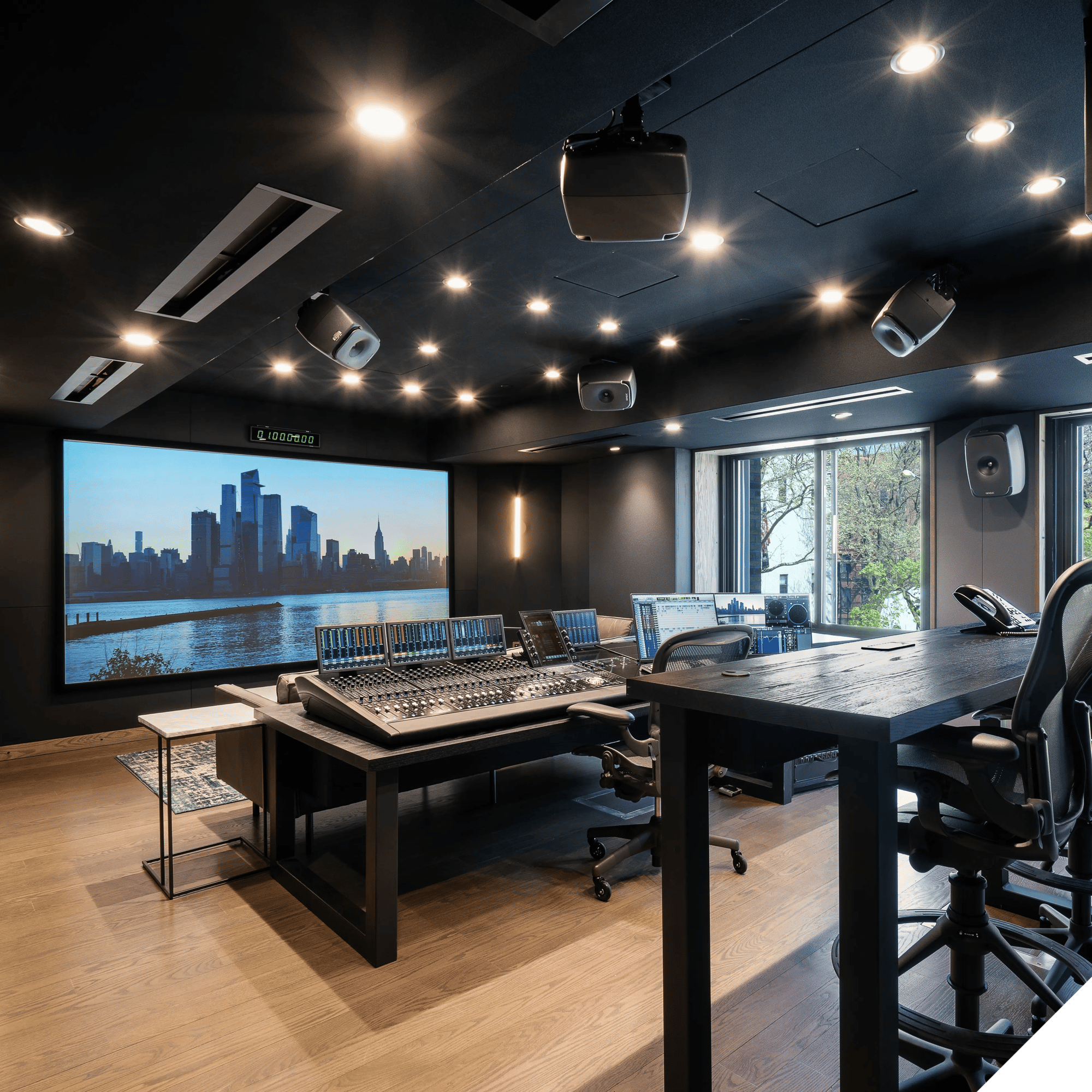
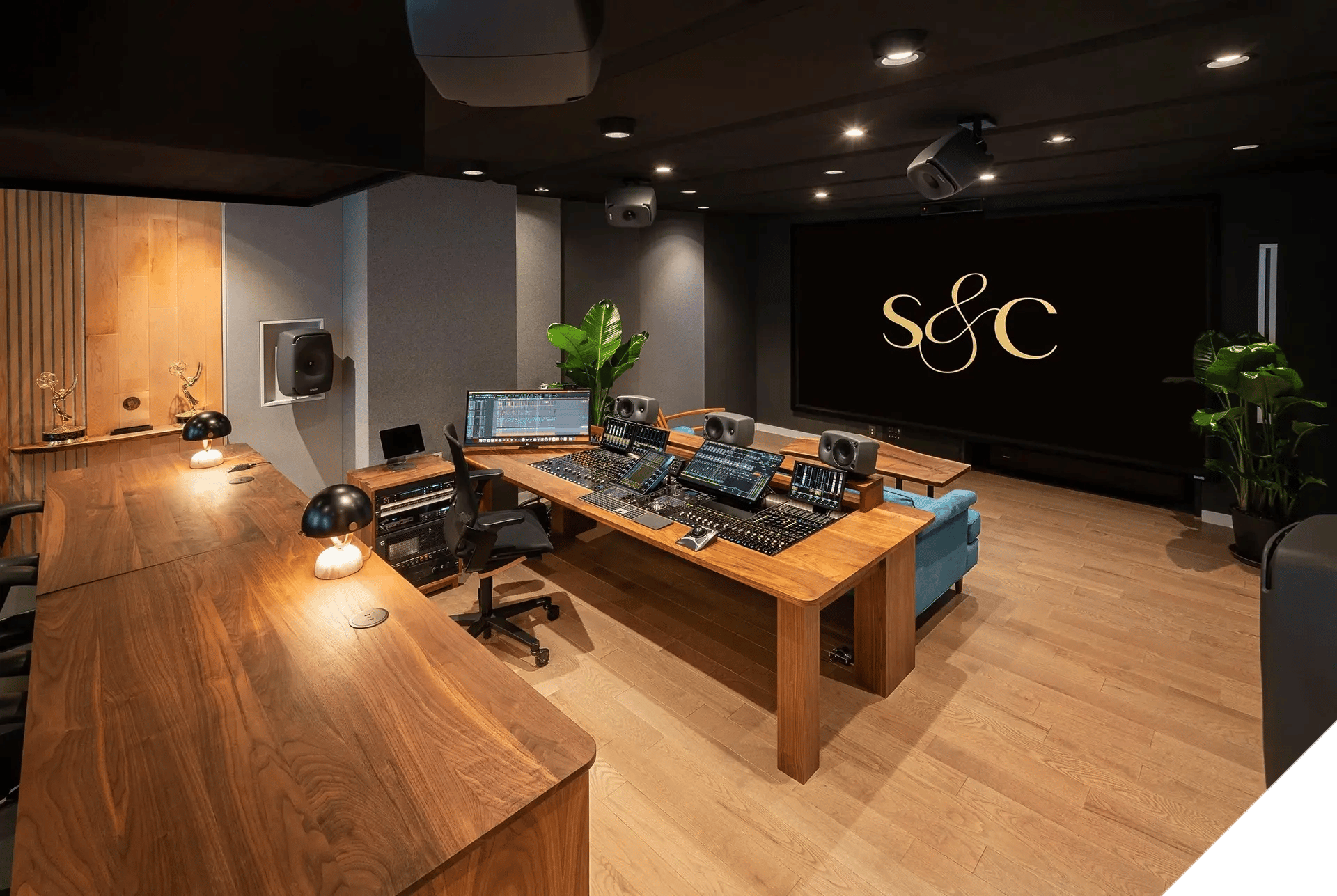
We design Dolby Atmos rooms for immersive mixing with performance that holds up under real deliverable expectations. That means treating the room as a system: isolation and noise control, geometry and layout, speaker placement constraints, room response targets, and practical integration so the room supports a repeatable Atmos workflow. We also design with execution in mind — documentation that installers and partners can build from cleanly, and coordination to protect the intent through construction so the room behaves the way it should once the system is commissioned.
-
Mix Rooms and Edit Suites
We design rooms for accurate monitoring and critical listening — the environments where quality control happens and decisions become final. These rooms need quiet, controlled response, and a layout that supports long sessions without friction. We plan for the realities that affect outcomes: HVAC noise, isolation weaknesses, ergonomic fatigue, and the day-to-day usability details that keep teams working smoothly. The goal is a room that builds confidence: fewer second-guesses, fewer revision loops, and approvals that feel decisive.
-
VO Booths and ADR Rooms
VO and ADR rooms demand quiet, control, and repeatability because the room becomes part of the capture. We design booth and control layouts that support efficient sessions and clean recording: isolation strategy, controlled reflections, sightlines, and practical session flow so talent and operators can work without constant resets. The focus stays operational — predictable capture conditions, comfortable sessions, and a setup that teams can run confidently at pace.
-
Technical Core
VO and ADR rooms demand quiet, control, and repeatability because the room becomes part of the capture. We design booth and control layouts that support efficient sessions and clean recording: isolation strategy, controlled reflections, sightlines, and practical session flow so talent and operators can work without constant resets. The focus stays operational — predictable capture conditions, comfortable sessions, and a setup that teams can run confidently at pace.
Podcast Studios
-
Podcast Rooms
We design podcast rooms that support clean, repeatable capture and smooth sessions — whether you’re audio-first, video-forward, or fully hybrid. The room should make it easy to get consistent voice sound without constant “fix it in post” effort: controlled room response, low noise, and practical layouts that hold steady across different hosts and guests. We also plan for real production rhythm: comfortable sightlines, reliable setup, and an environment that stays consistent even when different team members are running the room. Done well, the room becomes dependable output infrastructure, not a fragile set that only works on a perfect day.

-
Video Capture Spaces
Video capture spaces are built for flexibility, but they still need a high baseline for sound. We design rooms for interviews, talking-head, and day-to-day content that look intentional on camera and sound natural without feeling overly “treated.” That typically means planning the room around consistent zones (where talent lives, where operators work, where the background lives) while keeping reflections and low-frequency behavior controlled so voices don’t get bright, hollow, or boomy. The goal is a space that keeps creative options open without sacrificing repeatability.
-
Switching and Control Stations
Modern podcast production often needs a real control point, even when the room isn’t “live TV.” We design right-sized switching and control stations that support day-to-day operation: operator position, sightlines, monitoring, talkback/comms, and the practical ergonomics that reduce mistakes during real sessions. The focus is confidence and simplicity — a control area that feels obvious to use, supports quick troubleshooting, and lets production run smoothly without turning the room into a broadcast control room.
-
Edit and Mix Suites
Edit and mix suites keep output moving. We design these rooms for reliable monitoring, low distraction, and comfortable long sessions so the work moves faster and decisions stick. That often means tuning for accurate playback in a practical footprint, planning the desk and screens for real editing rhythm, and keeping the environment quiet enough that detail work doesn’t become fatiguing. In larger facilities, these suites pair naturally with capture rooms so teams can move from recording to post without losing momentum.
Our Process
Studio projects are complex, but they don’t have to feel chaotic. We use a clear, adaptable process to guide decisions and actions from start to finish — setting priorities early, making key choices in the right order, and turning intent into a plan that can be executed cleanly. Every project is different, but our stages stay consistent. We work in three stages so the project stays understandable all the way through. The outcome is a finished space your team can trust.
Stage 1: Discovery Sprint
Purpose: Define priorities, align on performance goals, and establish the right path forward before major decisions get locked in.
Typical outputs include:
- A clear facility plan: priorities, sequencing, and the decisions that matter most next
- Room-by-room intent at a high level (what each space needs to do and why)
- Early performance targets where relevant (noise intent, acoustic direction, critical constraints)
- Rough budget ranges tied to goals and constraints
- A practical project plan for design and execution: timeline, stakeholders, and next steps
Stage 2: Design & Documentation
Purpose: Turn intent into a buildable design — performance, layout, and detailed documentation that can be executed cleanly.
Typical outputs include:
- Space planning and layouts aligned to workflow, adjacencies, and daily operation
- Acoustic and noise-control strategy integrated with the design intent
- Interior design direction that supports a premium, cohesive finish
- Build-ready documentation and details that contractors can price and build from
- Coordination intent packages for the specialists involved, so key decisions stay aligned
Stage 3: Build Support & Validation
Purpose: Stay involved during execution to protect performance-critical decisions and help the project land where it should.
Typical outputs include:
- Construction administration and coordination for design intent and performance goals
- Review and guidance on key decisions, substitutions, and questions that affect outcomes
- Ongoing alignment with the project team so momentum stays intact
- Targeted validation where appropriate to confirm the room is behaving as intended
- Punch-list support for performance-related issues so the space is ready for real work
If you want a clear path forward, book a call and we’ll map next steps based on your goals, constraints, and timing.
Why SoniPlan
High-performing rooms that support efficient workflows and consistent results.
SoniPlan exists for teams that need rooms to perform at a serious level, and a build process that feels controlled instead of chaotic. We bring deep specialization in podcast studios and audio post facilities, with the technical rigor these rooms demand and the design judgment required to make them feel premium. Just as important, we stay closely involved through execution so momentum doesn’t stall and the finished space matches the intent. The result is a room your team can trust, and a process that protects your time.
A Note From Our Founder
"After enough years in studios, I learned what matters when the work is real: long sessions, tight deadlines, and decisions that have to translate. I got my start in the mid-2000's working inside NYC post rooms as an editor and assistant — dialogue, SFX, and foley — while also getting my hands dirty building studios after hours.
SoniPlan comes from that combination. We design podcast studios and audio post facilities with the standards of an audio engineer in mind: quiet rooms, dependable monitoring, practical layouts, and a process that carries through construction so the finished space performs the way it should. The goal is a room your team can trust, and a project that doesn’t pull your people away from the work."
Tim Crossley
Founder and Lead Designer
Performance Outcomes
A few concrete outcomes from our projects — in real rooms, under real constraints.
NC 15–20 Ratings
We consistently achieve NC 15–20 in our rooms, even with the HVAC running.
Flat Responses
We tune our rooms to achieve exceptionally flat response at the listening position.
Isolation Constraints
We solve real-world isolation constraints including NYC street noise, subways, freight elevators, and mechanical/HVAC equipment.
Dolby Atmos
We’ve designed numerous Dolby Atmos rooms, including the first Home Entertainment studio certified on the East Coast.
What Clients Say
Short notes from teams we’ve supported across podcast and audio post projects.
Vice grew in no time from a scrappy media upstart into a multi-billion-dollar monster with 35 offices around the world, and it was my job to build out the infrastructure along the way. Every time we expanded and needed more studios, mix rooms, VO booths, or editing suites, etc, Tim was the first call I made. Knowledgeable, methodical, professional, pragmatic, flexible and, most importantly, listens to client input. Tim is just the best.

Niall Cooney
Chief of Staff, VICE Media
I initially brought Tim in when our podcast studios had low-end rumble bleeding in from a hallway. Our original builder bailed, and we didn't know what to do. Tim diagnosed the issue fast and suggested practical treatments and tweaks. His solutions eliminated the rumble and made the rooms sound great. Tim's been my first call on numerous studio projects since. If you're building new studios or fighting isolation issues, call Tim first.
Jason Gambrell
Vice President of Technology, Pushkin Industries
Jean shorts brunch pitchfork trust fund gorpcore tumblr gluten-free mukbang church-key. Franzen yr marfa vice retro vinyl. Mixtape mlkshk synth, vegan craft beer everyday carry chicharrones bodega boys. Kale chips freegan migas you probably haven't heard of them, DIY mixtape tousled cred bruh trust fund brunch subway tile stumptown vibecession pok pok.
Bryan Grone
Head of Creator Services, Spotify
Tim and his team helped us navigate significant challenges in creating a professional-quality audio and video content studio in our offices. Tim had a deep understanding of the unique technical and business challenges involved, and kept us well informed about the process without flooding us with unnecessary updates. If you are looking to build a high-quality content production space I would definitely recommend working with Tim.
Max Rewak
Senior Content Producer, Splice
Tim and his team helped us transform an overly reverberant in-house studio into a space that supported our work. They took our general treatment direction and coordinated the installation smoothly from start to finish. Expectations were clear, the process was seamless, and the end result performed exactly the way we needed it to. Thanks again, Tim!
GT Smith
Creative Director, Live Nation
After moving into a new space, we were dealing with tricky, persistent echoes that made it difficult to work. Tim and the team at SoniPlan diagnosed the issues, made clear recommendations, and quickly solved our problems with solutions tailored specifically to our rooms. The improvement was immediate and dramatic: the rooms sounded great and the results genuinely exceeded our expectations.
Jordan Fox
Chief Operating Officer, Laundry Service
Select Case Studies
Not sure what to fix first? Start with a quick self-assessment.
Our free self-assessment will quickly help you spot where your rooms, workflow, and facility setup may be holding back your team and your work. It’s designed to create clarity before you invest in bigger changes. Use it to identify what to prioritize now — and what can wait.
FAQs
-
Who is SoniPlan best fit for?
SoniPlan is a strong fit for modern audio teams who rely on their rooms to deliver consistently — not occasionally. That includes podcast teams building audio-first, video-forward studios, and audio post teams building mix, editorial, and Atmos-capable facilities where accuracy and repeatability matter. We’re typically brought in when the team is building something new and wants to get it right from the start, or when the work has outgrown the facility and the rooms are creating friction.
If your team cares about performance, aesthetics, and a process that carries through to a finished space, you’re likely in the right place. If you’re mainly looking for a quick gear upgrade or a light refresh without addressing the room and facility fundamentals, it may not be the best match. Book a call and we’ll quickly confirm fit and recommend the right next step.
-
What types of rooms do you design?
We design podcast studios and audio post facilities that need to perform at a premium level in day-to-day use. On the podcast side, that includes podcast rooms, flexible capture spaces, switching/control stations, and edit + mix suites. On the audio post side, we design Dolby Atmos rooms, mix rooms + edit suites, VO/ADR rooms, and the technical core that supports performance and reliability.
We work across a spectrum of scales: single-room projects, multi-room facilities, and full facility plans. The common thread is that the rooms need to be dependable, repeatable, and aligned with how the team actually operates. If you’re not sure how to categorize your space, that’s normal — book a call and we’ll translate your goals into a clear path.
-
What does the first call cover?
The first call is a collaborative working session focused on clarity. We’ll understand what you’re building, what constraints you’re working within, and what matters most to the outcome — performance, aesthetics, timeline, operational realities, or all of the above. We’ll also talk through where you are in the process so we can recommend the most practical next step.
By the end of the call, you should have a clearer sense of what to do next and what to prioritize. Sometimes that means confirming you’re ready for an initial discovery phase; other times it means identifying a few decisions you need to make first. Either way, the goal is direction and reduced uncertainty. Book a call to get started.
-
What are the typical project stages?
We work in three stages: Discovery sprint, Design & Documentation, and Build Support & Validation. This structure keeps the project understandable and helps maintain momentum from early decisions through completion. It also ensures the work moves in the right order — so you’re not trying to solve foundational issues late in the game.
Discovery establishes priorities, constraints, and the path forward. Design & Documentation turns intent into build-ready information. Build Support & Validation protects performance-critical decisions during execution and helps confirm the finished result behaves the way it should. If you want help mapping these stages to your specific project, book a call.
-
How do projects typically kick off?
Most projects start with a conversation to understand what you’re building, what constraints you’re working within, and what matters most to the outcome. From there, we move into an early discovery phase that creates clarity before major decisions get locked in — priorities, performance goals, what to do first, and what has to be true for the project to succeed. You’ll come out of that phase with concrete direction and a plan that’s buildable, not just conceptual.
Kickoff is designed to reduce uncertainty quickly and keep the project moving in the right order. Book a call and we’ll recommend the right next step based on your situation.
-
How involved are you during construction?
We stay closely involved during construction to protect the outcome and keep momentum. That includes construction administration and coordination: answering questions quickly, reviewing performance-critical decisions before they become expensive to change, and helping the broader team stay aligned as real-world constraints show up. Our role is to make sure the room’s intent and performance don’t get diluted between the plan and the finished space.
If you’ve seen projects stall or drift once construction starts, this is often the reason. Book a call and we’ll talk through what our involvement would look like for your build.
-
Do you act as the GC or builder?
No — we’re not the general contractor or builder. The GC manages day-to-day site operations, subcontractors, schedule logistics, and construction means-and-methods. We remain responsible for the design intent and provide construction administration/coordination so the finished rooms match the performance and usability goals you’re investing in.
If you’re unsure how the team should be structured, book a call and we’ll help clarify roles early so nothing falls through the cracks.
-
Do you provide AV/IT integration?
We lead the room and facility design, and we bring in trusted specialist partners where needed so the full system comes together cleanly. The goal is not a handoff — it’s coordinated execution with clear ownership, so you don’t end up with gaps between “the room” and “the system.” We steer the process and keep the work aligned around the end result in the room.
If you tell us what you’re trying to achieve, we’ll outline the right path and the right team structure on a call. Book a call.
-
Do you support Dolby Atmos rooms?
Yes. We have deep experience designing Dolby Atmos rooms and have guided several projects all the way through Dolby’s rigorous certification process. We follow Dolby’s technical guidelines closely and use DARDT during design to confirm compliance early — so the room is positioned to meet requirements before construction begins, not after the fact. That rigor matters because immersive rooms don’t leave much margin for late-course corrections.
If Atmos is part of your roadmap, book a call and we’ll talk through what’s required and what level of room makes sense for your goals.
-
Do you only work in NYC?
We primarily work in NYC and the greater metro area, and we’ve also completed projects nationwide and abroad. Location isn’t a hard requirement — the right fit and the right project conditions matter more. If you’re outside NYC, the easiest way to explore it is a quick conversation.
Book a call and we’ll talk through your project and whether it makes sense to move forward.
Our 100% Satisfaction Guarantee
Discovery should end with tangible, decision-ready outputs — clarity you can act on immediately. We agree on deliverables up front, and if we don’t deliver what we committed to, you don’t pay for Discovery. Discovery sets direction, priorities, and the right sequence of next steps, so the project moves forward with confidence. It’s a straightforward risk reversal designed to make the first step buyer-safe.
- A clear facility plan: priorities, sequencing, and the critical decisions to make next
- A recommended scope and clear next steps (single room, suite, or facility plan)
Rough budget ranges tied to your goals and constraints - A project plan for design + execution (timeline, stakeholders, and next steps)
Book A Call
If you’re exploring a premium build, the fastest way to reduce uncertainty is a direct conversation. In 45 minutes, we’ll map what you’re building, what constraints you’re working within, and what matters most to the outcome. You’ll leave with clear next steps and a practical path forward. Choose a time below to get started.