Tim discusses how recording spaces can better support the people creating content, from practical acoustic improvements to the demands of professional production. He draws on his experience designing facilities and coordinating the many disciplines involved in bringing them to life.
Better sound in everyday recording spaces
Tim draws on his studio-design expertise to discuss practical acoustic improvements for creators recording in homes, offices and conference rooms. Starting with raw recordings, the room and the problems affecting the workflow, he explores room choice, microphone placement, furnishings and DIY acoustic panels. He explains how treating reverberation within a room differs from controlling noise entering or leaving it, helping creators identify appropriate approaches and spending priorities.
What changes when a podcast studio adds video
The shift toward video brings sets, lighting, cameras and new production workflows into spaces that still need to deliver excellent audio. Tim discusses how these requirements fit together, from acoustics and isolation to camera sightlines and the experience of being on set—and what teams need to consider as they move from audio recording into video production.
Designing studios for consistent, dependable production
A well-designed studio helps teams capture quality content and move efficiently from production through post-production to distribution. Tim discusses how acoustics, isolation, building systems and production infrastructure work together to support that process—reducing avoidable corrective work and keeping the facility from becoming a bottleneck.
How to choose a studio space
A building shapes what a studio can become. Structural capacity, surrounding noise and available ceiling height all affect the possibilities for isolation, acoustic treatment, lighting and building services. Tim explains what to investigate before committing to a space and how those early choices influence the design, cost and performance of the finished facility.
Designing for Dolby Atmos and MPA TPN requirements
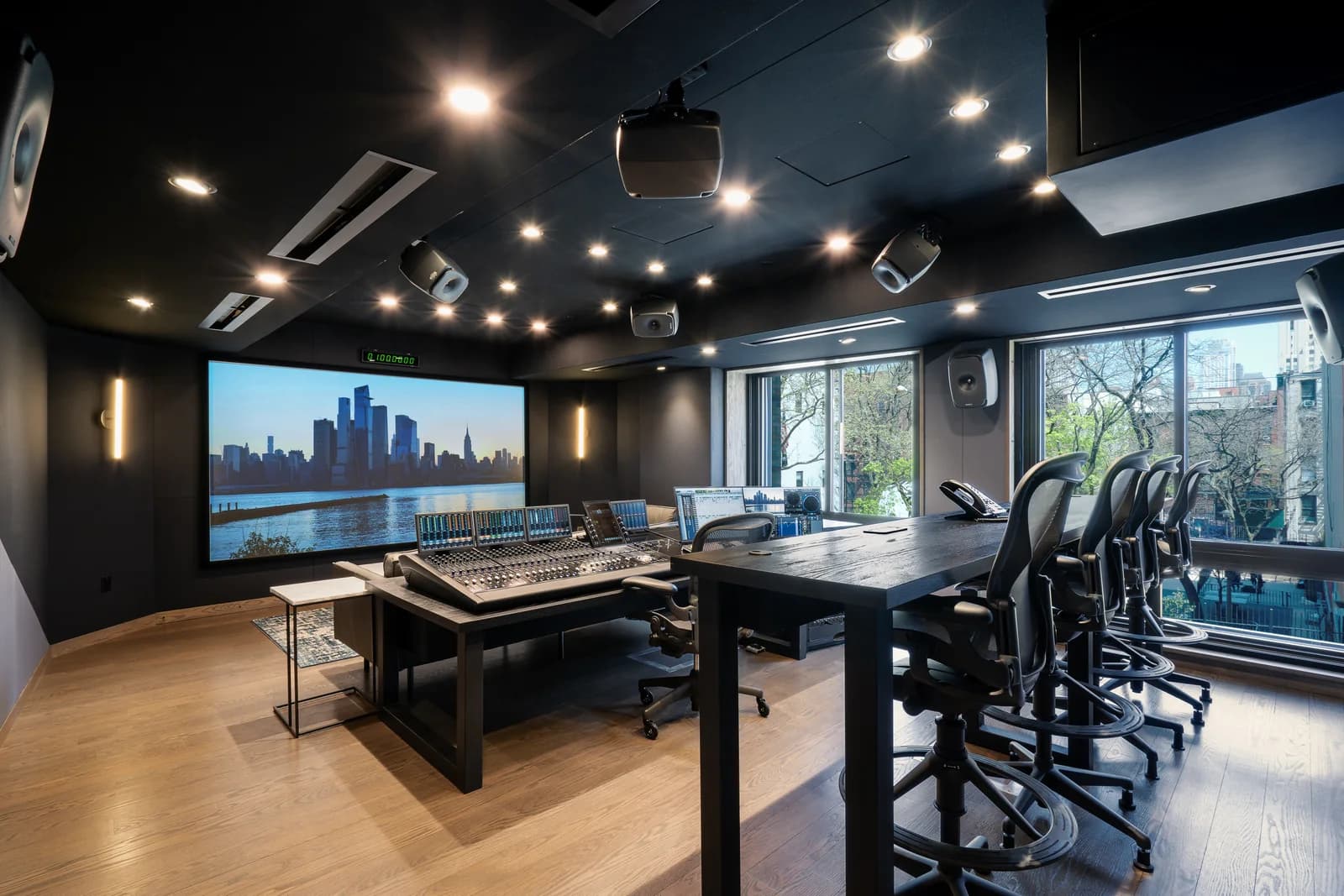
Audio post-production facilities bring demanding technical requirements into spaces where engineers and clients need to work comfortably. Tim discusses coordinating monitoring, projection, sightlines, isolation and quiet HVAC for Dolby Atmos work, alongside the access control, circulation and secure zones involved in planning for MPA’s Trusted Partner Network. His perspective spans design, construction oversight and the testing and tuning needed to achieve the intended acoustic performance.
Designing studios for clients with real-world constraints
Every studio project involves choices about performance, interiors, cost and schedule. Tim discusses how listening to clients and understanding their workflows shapes those decisions, and how to explain trade-offs so clients can make informed choices. The aim is a comfortable, capable facility that supports the work and fits the realities of the project.